TELL THE TRUTH
Make the problem visible.
00
AI scales agency. Culture determines whether that agency becomes progress or chaos.
Opening — about 45 seconds
I want to connect the biggest technology lesson I learned with a current AI win. The lesson was not about a language, framework, or tool. It was about the conditions that let people use tools well.
My argument: AI dramatically increases what one person can attempt. Whether that becomes progress depends on trust, ownership, and guardrails.
“I BROKE
PRODUCTION LAST WEEK.”
Said by a senior dev during a meeting.
No panic.No finger-pointing.Straight to: “How do we fix it?”
THE SURPRISE The absence of blame did not mean the absence of accountability.
Story — about 1 minute
When I first joined a startup, a senior developer said in a meeting, “I broke production last week.” Everyone took it in stride. It seemed normal.
That moment stayed with me because nobody spent energy protecting themselves. The person who made the mistake surfaced it, owned it, and helped move the team forward.
Make the problem visible.
Act with urgency, not fear.
Improve the system, then move on.
MAKING THINGS BETTER HELPS EVERYONE.
Lesson — about 1 minute
A no-blame culture is not a no-accountability culture. It sets a higher bar: tell the truth quickly, take responsibility for the recovery, and leave the system better than you found it.
That creates freedom to experiment because failure is recoverable—not consequence-free.
“You don’t need to ask. If there’s something you want to change, make it happen.”
A culture of leadership begins inside us. We ask how we can serve others, accept the responsibility to act, and make things better.
Leadership culture — about 1 minute
Later, the CEO put words to the culture: You already have permission to lead. You don't need to ask. If there is something you want to change, make it happen.
This is not permission to ignore others. Leadership begins by asking what will serve people, then accepting responsibility for making it real.
One person can now explore, design, implement, test, and coordinate work that once needed a much larger team.
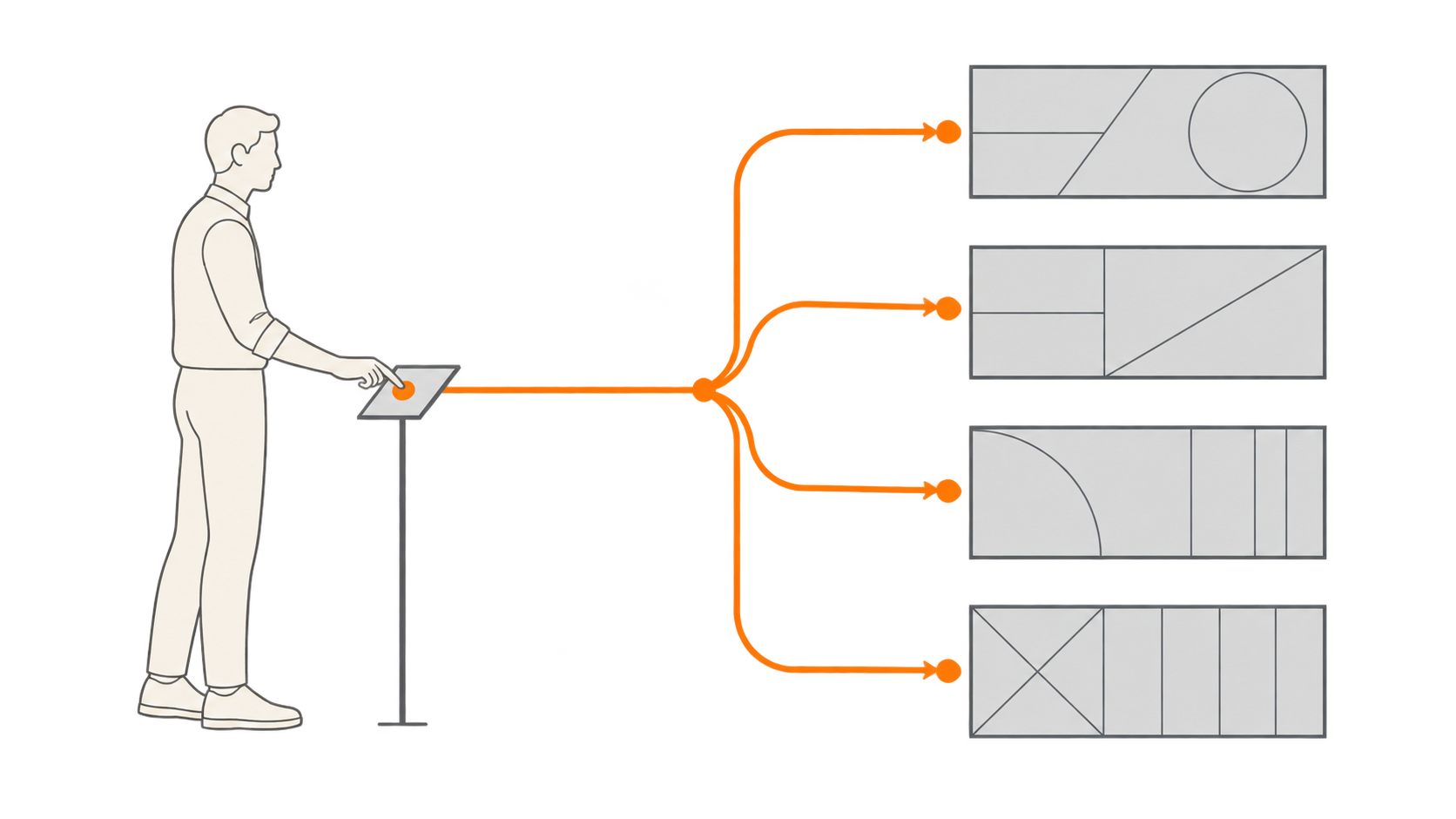
THE QUESTION What happens when we give that agency a real engineering problem?
Bridge — about 1 minute
AI changes the scale of agency. A person with a clear goal can now run several lines of inquiry or implementation at once.
But more capability also creates more opportunities for drift, duplication, and failure. So I wanted to test a structured version of that agency.
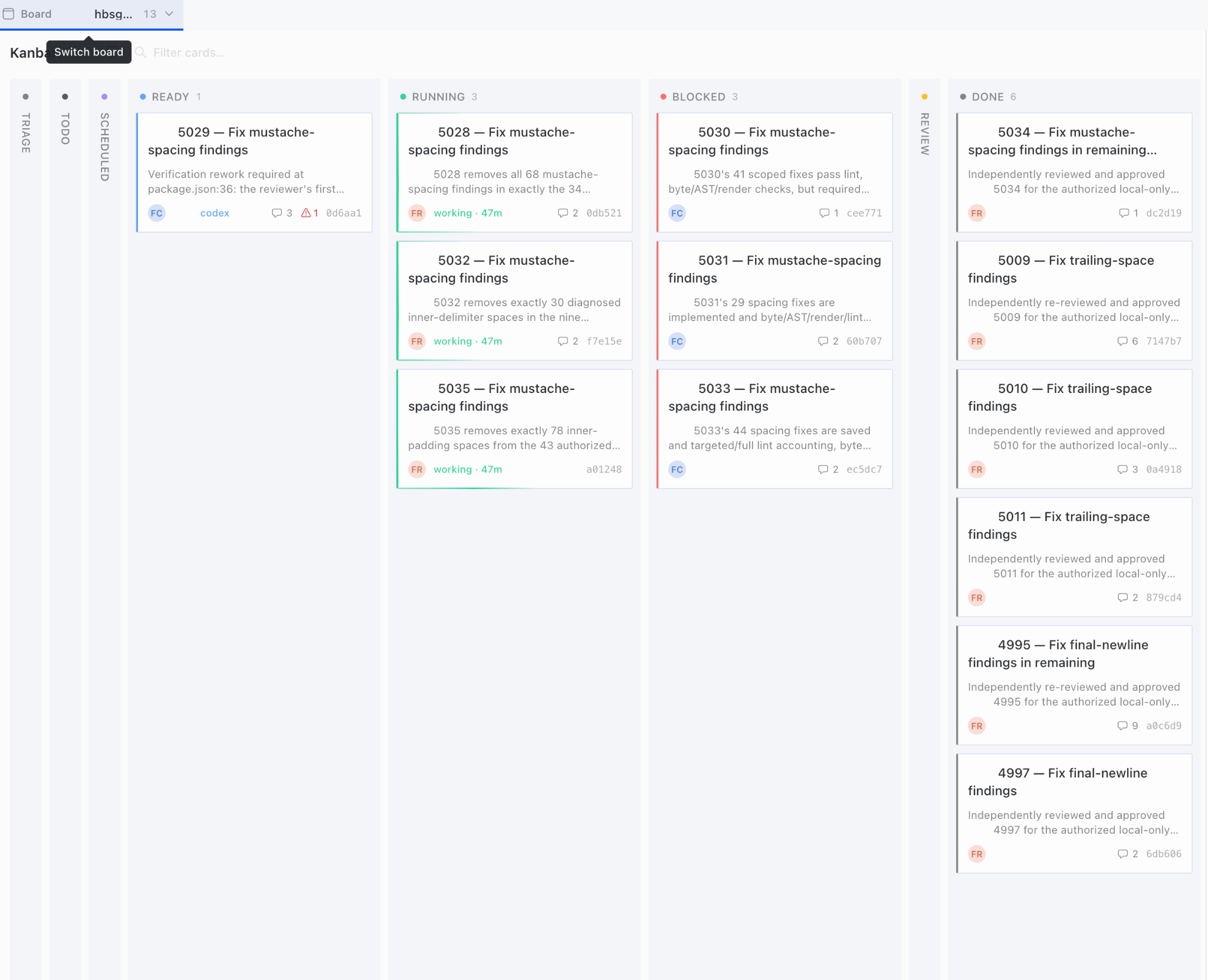
Hermes agents claimed bounded hbsguard tickets across a shared Kanban workflow.
The experiment — about 1 minute
hbsguard is a standalone Handlebars linter I built. I used Hermes to place a set of focused engineering tickets on a shared Kanban board.
Agents could claim ready work, move it through running and review, and expose state to one another. The goal was to learn where coordination genuinely improves focused engineering work.
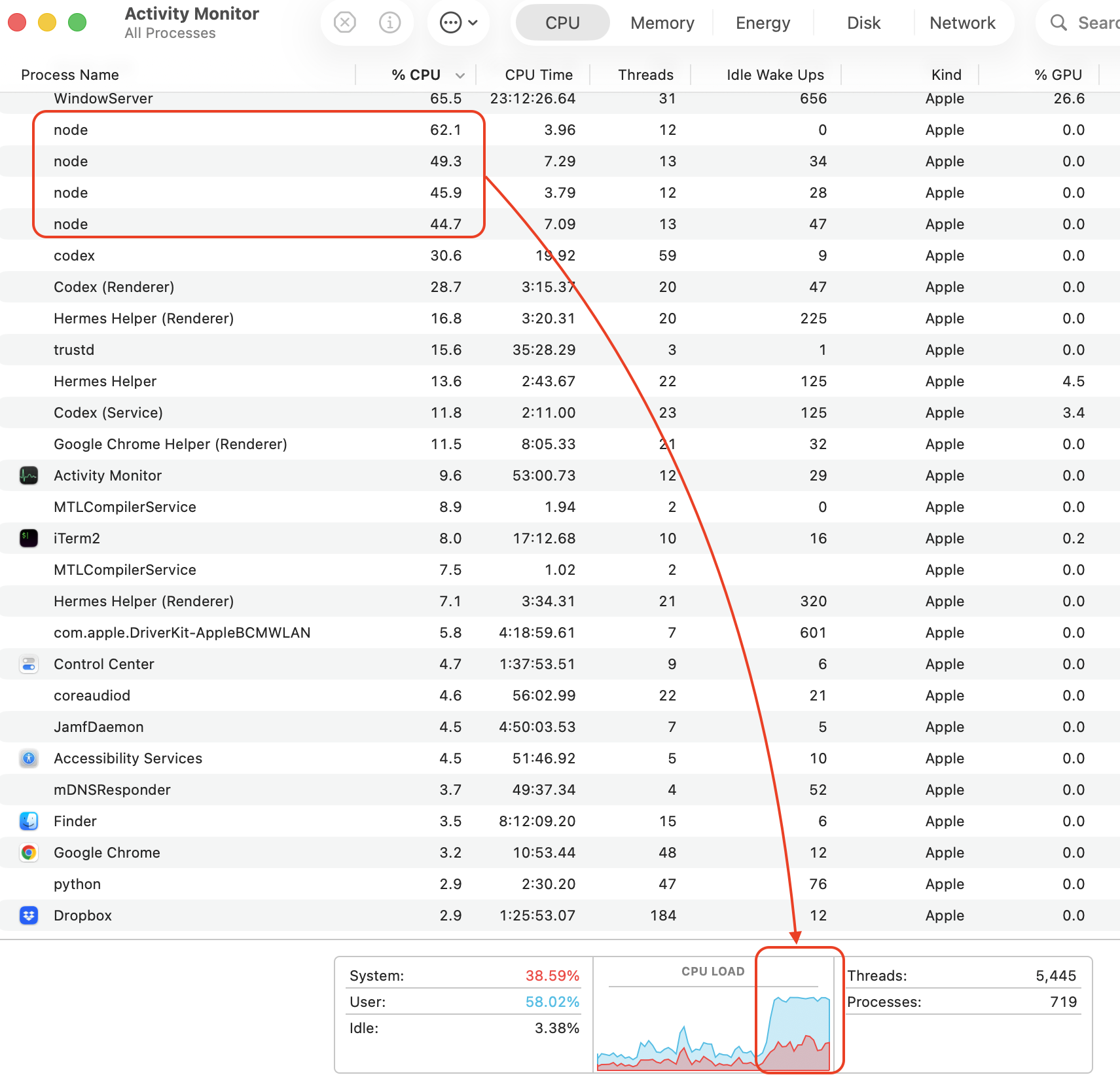
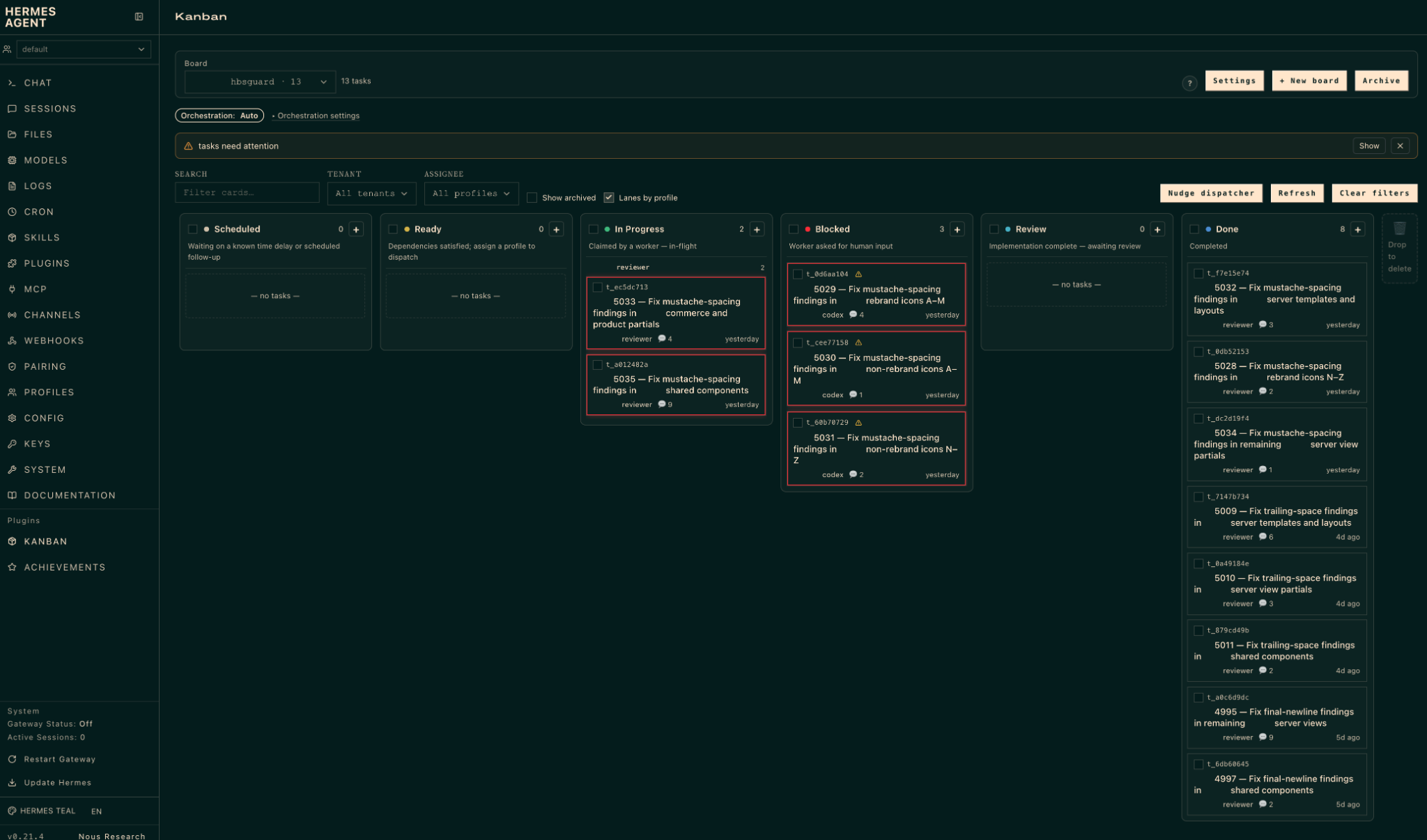
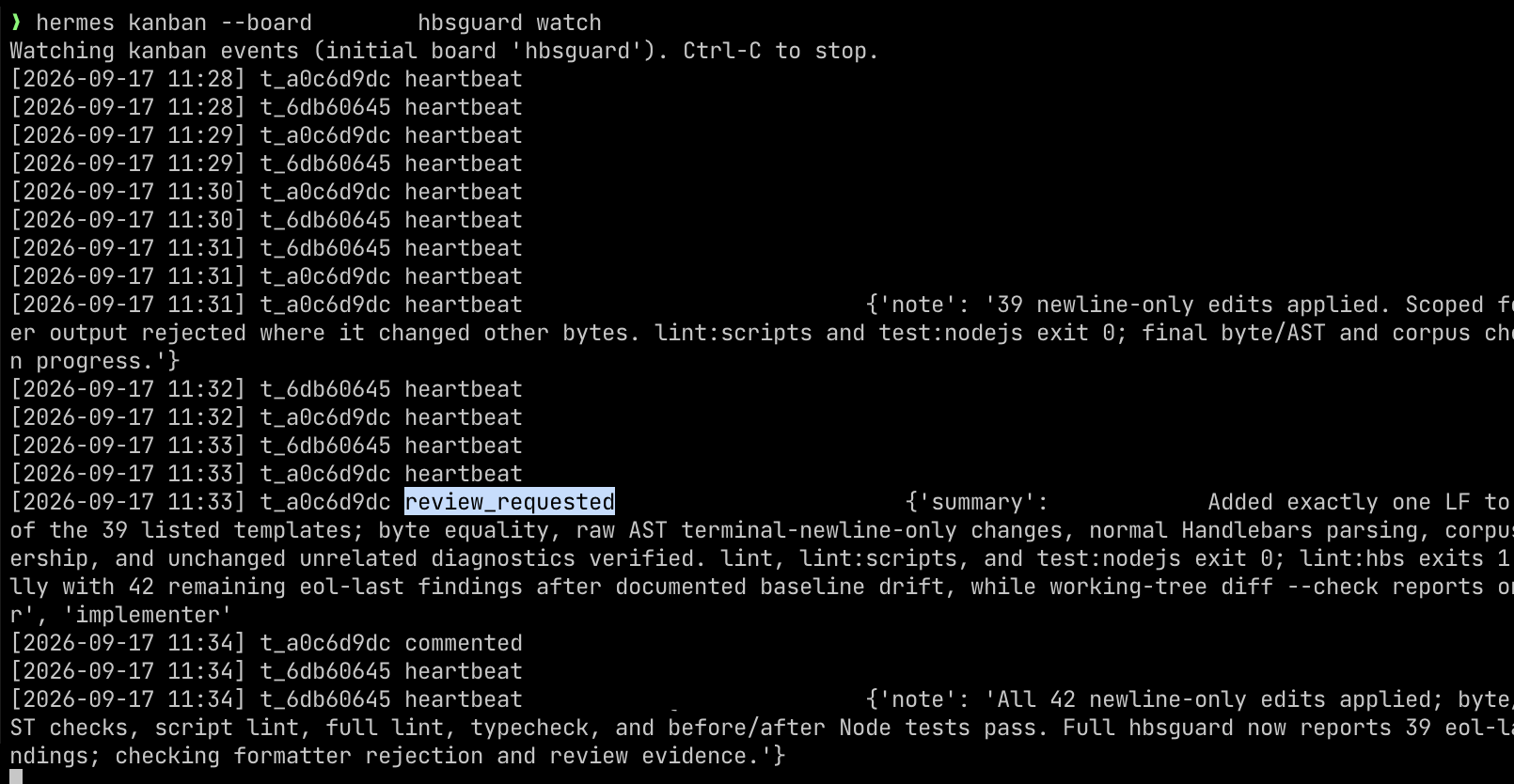
Workers begin in parallel. The dashboard and terminal make claims, handoffs, heartbeats, and status changes visible.
Workflow — about 1 minute
The useful part was not simply having several agents. It was making their work legible.
I could see who claimed what, whether a process was alive, when work changed state, and where review was needed. Parallel work is only useful when coordination does not become invisible.
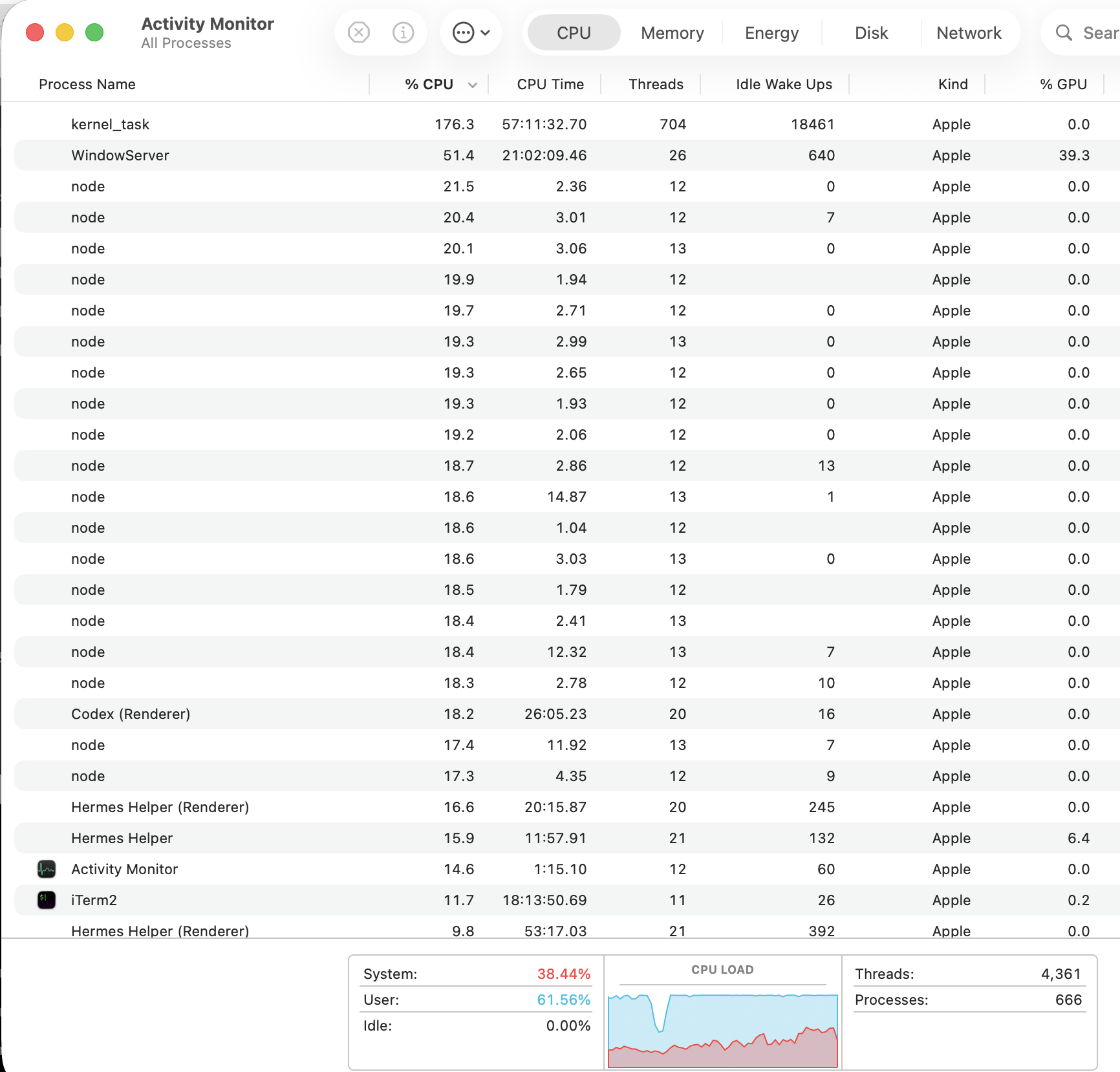
More agents did not mean more progress. My laptop became the bottleneck.
THE LESSON The failure made an invisible constraint visible.
The failure — about 1 minute
Then my laptop became nearly unresponsive. More workers were not producing more throughput; they were competing for a fixed amount of memory and CPU.
This was a useful failure. The constraint moved from human typing speed to orchestration and system resources. The experiment made that visible.
Small, clear tickets with an exit condition.
Make progress, ownership, and failure legible.
Separate creation from acceptance.
Keep experiments cheap enough to learn from.
AI DOESN’T REPLACE OWNERSHIP. IT MULTIPLIES THE PLACES WE NEED IT.
Guardrails — about 1 minute
The culture lesson maps directly to agentic work. Give agency, but make responsibility concrete.
Bound the work. Expose state. Require review. Make failure recoverable. A human remains accountable for the direction and the result.
What would you improve this week
if you knew you already had permission?
Close — about 45 seconds
My biggest tech lesson is that trust is a multiplier. Give people permission to act, make their work visible, make failure recoverable, and keep a human accountable.
AI makes that lesson more important, not less. So I will leave you with one question: What would you improve this week if you knew you already had permission?
AI did not provide the permission. It increased the range of things I could responsibly attempt.
A private, local dashboard for understanding coding-agent token, cache, and cost patterns.
A standalone Handlebars linter with a browser playground and optional fixes.
A browser restoration of a Palm OS strategy game, rebuilt through source archaeology and tests.
Optional encore — only if the discussion goes here
This mindset helped me ship several experiments: Agent Almanac to understand coding-agent usage, hbsguard to lint Handlebars, and Miner 2149 to restore an old Palm OS game for the web.
Use this as a rabbit trail, not part of the required ending. The previous slide is the formal close.